

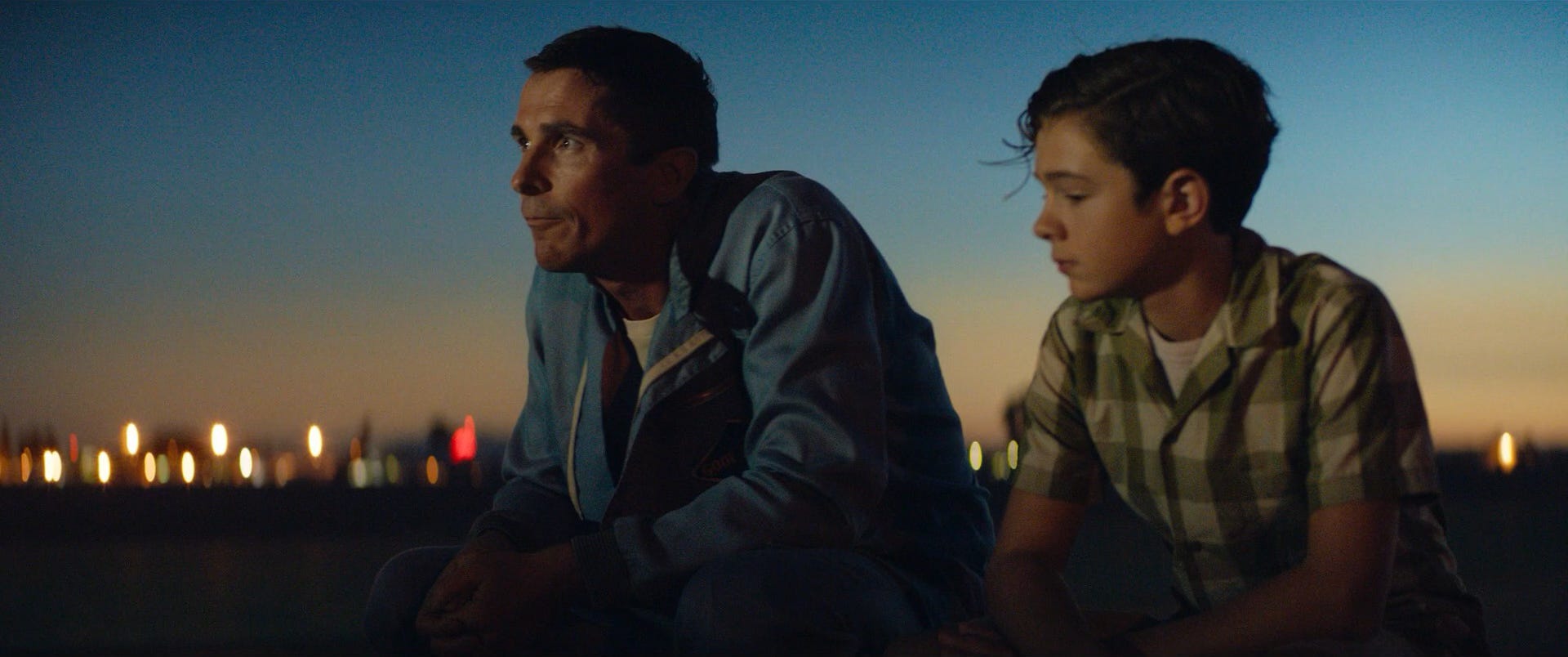
Phedon Papamichael grew up between Athens and Munich, studying fine arts, wanting to be a painter. He moved to photography because a canvas felt too solitary. He moved from photography to cinematography for the same reason. Still photographers on a film set, he noticed, were always alone. No crew. All decisions made in isolation. The whole world of cinema was right there and they were adjacent to it, not inside it.
He came to America at twenty-three, carrying stills he had printed in his own darkroom. John Cassavetes, his cousin, had seen the work and written an encouraging letter. Come. Join him. Phedon moved to Los Angeles. By the time he arrived, Cassavetes was finishing his last film, Love Streams. There was no formal apprenticeship. There were card games. There were conversations. There was watching, absorbing, listening to how a filmmaker thought.
He never went to film school. He shot a short film on a borrowed French 16mm camera that he did not fully know how to operate, using his Nikon F3 as a light meter because he did not own an actual one. The mags leaked light. He had to explain to his focus puller how to pull focus. It was an experiment from beginning to end. Then someone else asked him to shoot their short. Then someone else after that.
That was the education. Doing it. Making mistakes in public and continuing anyway.
The difference between a photographer and a cinematographer
Papamichael came from still photography and he is precise about what crossing into cinema taught him. The difference is not technical. It is temporal.
A still photographer waits for the moment. He carried two cameras on every vacation, one loaded with black and white, one with color. He was always working. Always hunting. He realized at some point that he was either ruining the moment by photographing it or upset that he was not capturing it. There was no middle ground. He was never just present.
A cinematographer is assigned a film. He works intensely for three to five months. Then he goes on vacation and puts his phone in his pocket and relaxes.
More importantly: a still photographer captures a moment. A cinematographer has to maintain one. On a day exterior, a scene that appears to take place over five minutes may require eight hours to shoot. The light changes constantly. The job is to make the audience feel that those eight hours of shifting conditions are a continuous, coherent five-minute world.
This is the invisible craft. When it works, no one sees it. When it fails, the audience feels something is wrong without being able to say why.
Ford v Ferrari and the discipline of laying out a day
The Le Mans pit sequence in Ford v Ferrari was shot on a 300-yard set built on a private airstrip in Agua Dulce, north of Los Angeles. The runway orientation placed the pits in shade every morning, regardless of weather. This was not ideal.
Papamichael made it work by designing the entire shooting day around the sun’s movement. Dawn scenes and dusk scenes in the morning while the pits were shaded. Then around eleven the sun would hit the pit areas directly. The midday top light, which is almost always unflattering, became the lunch break. By the time the crew returned at two, the afternoon sun was raking across the pits frontally, golden and directional. That is when they shot the sunny scenes.
People watched the film and asked how the whole thing seemed to be bathed in warm light. The answer was not equipment. It was scheduling. Every shot was placed where the natural light already wanted to go. The equipment was there as backup, parked around the corner with cable run, brought out only when the light could no longer be found.
His gaffer on most days: should I bring the 18K? His answer: probably not. Let’s see what we have.
The script that already plays in your head
When Papamichael reads a script he is interested in, something specific happens. He sees the finished film. Not a plan for the film. The actual film, as if already edited and color-timed, with the score playing underneath. If that vision comes easily, he knows the material is strong. If it does not come, he starts to see where the problems are.
The problems he identifies on first read, he says, are always still there when he sees the finished film years later. He can pinpoint the exact moment in a movie, the exact thing that never got resolved, and it is always the same thing he noticed on page one. Nothing that happens in production or post can fix what is wrong in the screenplay. A good director can make a good script great. Nobody can make a bad script into a good film. He has worked on movies where the crew was exceptional, the production design was extraordinary, the performances were committed, and the film still did not work because something fundamental was unresolved from the beginning.
He was on Sideways expecting to make the first not-so-good Alexander Payne film. The script seemed fine but he could not quite see it. Then he watched Payne build the film around Paul Giamatti and Thomas Haden Church, two actors the studio resisted, and realized the script had been underestimating itself. Everything Payne brought to it in the making was already latent in it. He just could not see it on the page.
How to work with a director who is precise about everything
Papamichael has done five films with James Mangold and six with Alexander Payne. The working methods of the two are almost opposite. With Payne, there is openness, spontaneity, a willingness to move furniture on the day and redesign a scene from scratch. With Mangold, the precision is relentless. If a camera move comes in slightly wrong, Mangold notices it from across the room while watching a monitor and comments on it before Papamichael has finished giving the correction through his earpiece.
Neither approach is superior. Both produce excellent work. What they have in common is shared taste. Papamichael and Mangold draw from the same cinematic references. They like the same films. They understand the same visual language without having to explain it to each other every day. On Ford v Ferrari, this meant agreeing early that the film should feel like Grand Prix and Steve McQueen’s Le Mans, wide frames, classic compositions, the power of holding a shot rather than cutting, the camera placed where you feel what it is like to be inside one of those machines rather than watching from outside.
On Nebraska, working with Payne meant embracing the black and white not as a style choice but as the emotional truth of the material. The wide compositions that made characters look small and lost inside their landscapes. The loneliness and isolation rendered visible. Bruce Dern sitting in a room, a slow wraparound that begins behind him and comes gradually to his face. The black and white cinematography worked because the story required the world to feel exactly that stripped of comfort.
Human error as a creative tool
After a location scout on one of the Payne films, Papamichael overheard a conversation between Payne and a director known for total visual control. The other director was explaining how he had eliminated human error entirely from his process, using multiple cameras in simultaneous feeds, adjusting the frame digitally in real time, guaranteeing that every composition landed exactly where he intended.
Payne listened. They left. Walking back to the car, Payne turned to Papamichael.
“I like human error,” he said. “I like when the operator overshoots and comes back.”
The moment lives in Papamichael’s memory as a complete statement of approach. The imperfection of a camera operator responding in real time to a performance, anticipating wrong, correcting, arriving a beat late or a beat early. That quality of searching is not sloppiness. It is the camera being alive in the same room as the actor. It feels different to an audience than total design, even if they cannot say why.
He watches John Cassavetes films and Hal Ashby films and understands he cannot imitate them. That handheld looseness, that rawness, is not a technique to be borrowed. It belongs to specific sensibilities and specific relationships between directors and actors. If he tried to apply it, it would be imitation without the truth underneath. But he understands what it is doing and why it works and sometimes he wishes he could find his own version of that feeling. The best version he has found is letting the operator respond rather than execute. Giving the actor the room to do something unexpected and getting to it.
What makes an image stick
Papamichael was on the jury for student films. He sat through thirty-minute shorts, anamorphic, Dolby surround, elaborate in every dimension. Then he watched a four-minute black and white film from Poland, no dialogue, and cried.
He thinks about this often. The elaborateness of a thing is unrelated to its emotional power. The most beautiful movie is nothing if the audience is not connected to the characters. He has seen films with flawless cinematography and meticulous production design where he felt nothing. He has seen films shot on almost nothing that broke him open.
The I of March frame behind the American flag — Philip Seymour Hoffman confronting Ryan Gosling, backlit against a transparent flag — was not designed. He walked behind the stage, saw how the light was hitting the flag, had his gaffer and key grip stand in silhouette. Showed it to George Clooney. That looks cool. Let’s do it. One setup. Wide shot. Two tight closeups.
That is the whole story of iconic images as he understands them. You cannot force them. You have to be alert enough to find them when they appear. And they only work if the drama of the scene is already there waiting to be met. The flag meant something in that moment because of what those two characters were doing to each other. The composition amplified it. Without the scene it would just be a pretty picture.
Simple is good. Less is more. He says this to his crew every day. They are usually right that the extra rig will help. He usually uses it. But the instinct to resist overpreparing, to leave room for the location to tell you something you did not anticipate, is the instinct that keeps the work alive.
This conversation was recorded for the Invisible Storytelling podcast. Subscribe below for more craft breakdowns from the show.