

Matthew Libatique grew up Filipino American with immigrant parents who had no map for how to navigate the American dream. Film school did not seem like a realistic destination. Filmmaking did not seem like a possible life. Then he discovered Spike Lee, and his world cracked open. Here was proof that someone who looked like him, who came from where he came from, could make something that mattered.
He ran with that.
At AFI he met Darren Aronofsky on the first day. They were young enough to have no responsibilities, old enough to care deeply about hip hop and popular culture and the transition from being teenagers to men. The aesthetic connection preceded the cinematic education. By the time they made Pi together, all living in the same cramped apartment, driving to set every morning in the same van with a coffee cup and a lighting package built from Home Depot supplies, the collaboration was already something that could not have been engineered. It just was.
He has shot seven films with Aronofsky. Five with Spike Lee. He does not collect collaborators. He collects people he wants to spend seventy hours a week with.
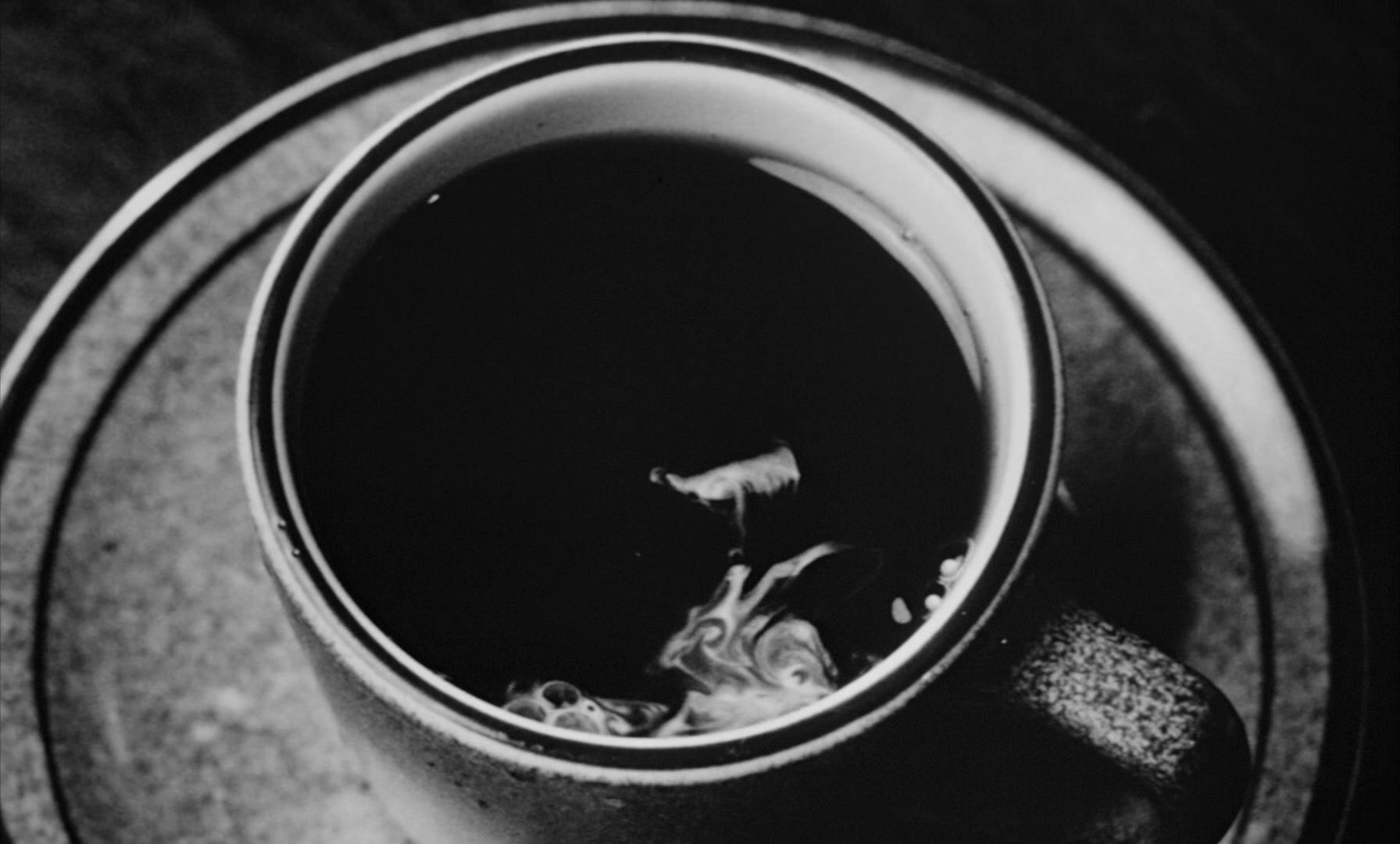
Everything visual is born out of the screenplay
Before Libatique discusses a single image, he breaks the script down scene by scene into a document that tracks director intention, his own initial reaction, his current intent, and everything the scene requires from camera, grip, electric, special effects, and visual effects.
The document is not a shot list. It is a living record of how his understanding of the material changes over the course of prep, and it gives him something to return to when he is in the color suite months later trying to remember what he intended on a day when clouds kept blowing through and the light would not cooperate.
He also writes letters to his colorist. Not technical memos. Actual letters. Today was a difficult day. The weather did this. Here is what I was fighting for and here is what I got. By the time the grade arrives, those letters are the document of his intentions rather than the faded memory of a long shoot.
“I just write a little note,” he says. “And by the time I get back to the DI, I just look at all those letters.”
The prep and the documentation are the same act. Both are about making sure the intention survives the distance between the day of photography and the day of finishing.
The camera follows the character, not the shot
Libatique is wary of cinematographers who start from wanting a dope shot and work backward to justify it. He has seen it. He has felt the temptation himself. His check against it is always the same question: what is this about in terms of character?
The Harley Quinn tracking shot in Birds of Prey is a single take that moves through a club and finds her celebrating her independence after a complete collapse. The shot works because it is entirely about where she is emotionally at that moment. The movement is the feeling. Remove the character’s interiority and it is just a technically ambitious exercise.
The hotel scene in Straight Outta Compton works the same way. A Movi shot that clocks each band member and then lands on a confrontation with guns. The camera is not showing off. It is accounting for every person in that room because every person in that room matters to what is about to happen.
“If your initial motivation is that would be a dope shot,” he says, “then you have to ask yourself exactly what is gonna make it fit the story.”
The question has to come before the image, every time.
Drawing from personal experience without explaining it
Libatique calls himself a method DP. Aronofsky uses the same phrase for him. What it means in practice is that he finds a personal emotional entry point into each character he is photographing and lets that connection inform choices he cannot always fully articulate.
Bradley Cooper’s character in A Star Is Born. Max Cohen in Pi. Sara Goldfarb in Requiem for a Dream. Nina in Black Swan. Four characters who drew something specific and personal out of him, four films where he feels the connection between his emotional state and the visual decisions most acutely.
He cannot always explain the direct link between a feeling and why something is a certain luminance or a certain color temperature. He does not think the explanation is the point.
“There’s an emotional connection,” he says. “And that emotional connection is directly manifested by whatever my skill level is at that point in time.”
The technical choices are the emotional choices, expressed through craft rather than language. When the character is internally complicated and the film gives him quiet moments, that is when the image gets to do the most. Those are the moments he works hardest for. Not the action, not the exposition. The silence where a face has to carry everything.
What black and white taught him about color
On films with aggressive color, films like Birds of Prey where the palette is saturated and loud, the cinematographer has tools that a more restrained film refuses to offer. Color creates tonal separation. It tricks the eye. It assists composition in ways the audience does not consciously register.
Strip all of that away and what remains is the performance and the camera position. Nothing else. Black Swan was shot on 16 millimeter with a philosophy of finding the best light for the move rather than lighting for a fixed angle. He was not composing frames so much as chasing a feeling around a room.
“That film works because of Natalie and the direction of Darren,” he says. “I just did what was appropriate.”
He means it as an honest accounting of the cinematographer’s role, not false modesty. The films that succeed because of cinematography are a small handful. You can count them on one hand. Everything else succeeds because of performance and story. The cinematographer’s job is to make sure nothing gets in the way of that, and to find the moments where the image can quietly add something the words cannot say.
On building a lighting package from Home Depot
Pi had no budget for a proper tungsten package, no money for color correction gels to balance windows from interior lighting. Libatique built his own lighting rig from what he could source himself, packed it into cases with stingers he had accumulated, and drove it to set every morning.
He does not tell this story as a hardship. He tells it as the beginning of a principle he has never abandoned: stylistic choices born out of necessity are often the most honest ones you will ever make. The constraints forced a visual language that the film required and could not have been designed in any other way.
“If you feel like it’s easy, you’re not doing it right,” he says.
He is not romanticizing difficulty. He is describing what happens when preparation meets a problem. You do not get to choose whether the problem arrives. You only get to choose how ready you are when it does.
On staying ahead of everything
The job of the cinematographer, as Libatique defines it, is to never let the crew get sold down the river. To prepare so thoroughly that when decisions have to be made fast, the foundation is already there. To stay ahead of the director, ahead of production, ahead of the day, so that when something goes wrong and something always goes wrong, the answer is already somewhere in the preparation.
He is blunt about what happens when that preparation is absent. Twenty-hour days on independent films where one bad decision at hour twelve killed the crew and made everything that followed worse. The preparation is not for the director. It is for everyone who shows up and trusts you to know what you are doing.
He still drives to set. He still drinks coffee from a cup. He is just no longer wishing he were somewhere else.
This conversation was recorded in 2020 for the Invisible Storytelling podcast. Subscribe below for more craft breakdowns from the show.